How to Write a Service Proposal That Converts | ServicePlex
Writing a service proposal that converts is one of the most valuable skills any freelancer, agency, or service business can develop. A well-crafted business proposal isn't just a price sheet — it's a persuasion tool that builds trust, demonstrates expertise, and compels clients to say yes. In this guide, Serviceplex breaks down exactly how to write a client proposal that closes deals, step by step.
Why Most Service Proposals Fail
How to Write a Winning Service Proposal: 6 Key Steps
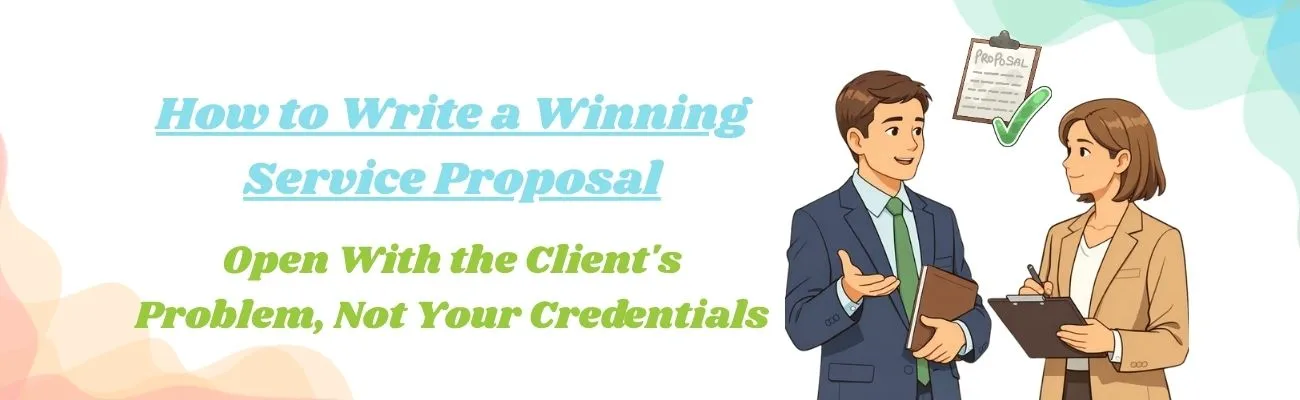
1. Open With the Client's Problem, Not Your Credentials
2. Clearly Define Your Proposed Solution
3. Structure Your Proposal for Skimmability
4. Present Pricing With Context
5. Include Social Proof and Case Studies
6. End With a Strong, Deadline-Driven Call to Action
Elements Every Service Proposal Must Include
- Executive summary addressing the client's core problem
- Clearly scoped deliverables with timelines
- Transparent, value-anchored pricing tiers
- Relevant social proof or case study
- Team introduction (brief — 3–4 lines max)
- Terms, conditions, and revision policy
- A single, specific call to action with a deadline
Common Proposal Writing Mistakes to Avoid
Even experienced service providers make mistakes that kill deals — sending a generic proposal template without personalization, burying the price with no context, using jargon the client doesn't understand, or attaching a 20-page document when 5 pages would do better.
Keep your service proposal concise, focused, and client-centric. Every sentence should either build value, reduce risk, or move the client toward a decision.
Stop losing deals to better-looking proposals. At Serviceplex.in, we help service providers build smarter systems, better pitches, and stronger client relationships.
FAQs:
Q1. How long should a service proposal be?
For most service businesses, 4–6 pages is ideal. A shorter client proposal respects the decision-maker's time and forces you to focus only on what matters. Longer proposals suit complex enterprise contracts with detailed technical scopes.
Q2. What is the best format for a business proposal?
PDF or an interactive web-based proposal tool (like PandaDoc or Proposify) works best. These look professional, are mobile-friendly, and let you track when the client opens your business proposal — giving you the perfect follow-up moment.
Q3. Should I include pricing in a service proposal?
Yes, always. Clients expect transparency. Present pricing with context, anchor it to ROI, and offer 2–3 tiers to give the client a sense of control rather than a simple yes/no decision.
Q4. How do I follow up after sending a proposal?
Follow up within 48–72 hours with a short, friendly email asking one specific question — such as "Did you have any questions about the scope in section 2?" This keeps the conversation alive without feeling pushy and is one of the most effective proposal closing strategies available.
Q5. Can I use a template for every client proposal?
A service proposal template is a great starting point, but always personalize at least 40% of the content — especially the problem statement, case study, and call to action. Clients can spot a copy-paste proposal, and it signals you don't value their business enough to customize.
Published on 18 May, 2026 · 281 views
Put this into practice on ServicePlex
Find freelancers and businesses to work with, or list your own services — contact is direct and there's no commission.